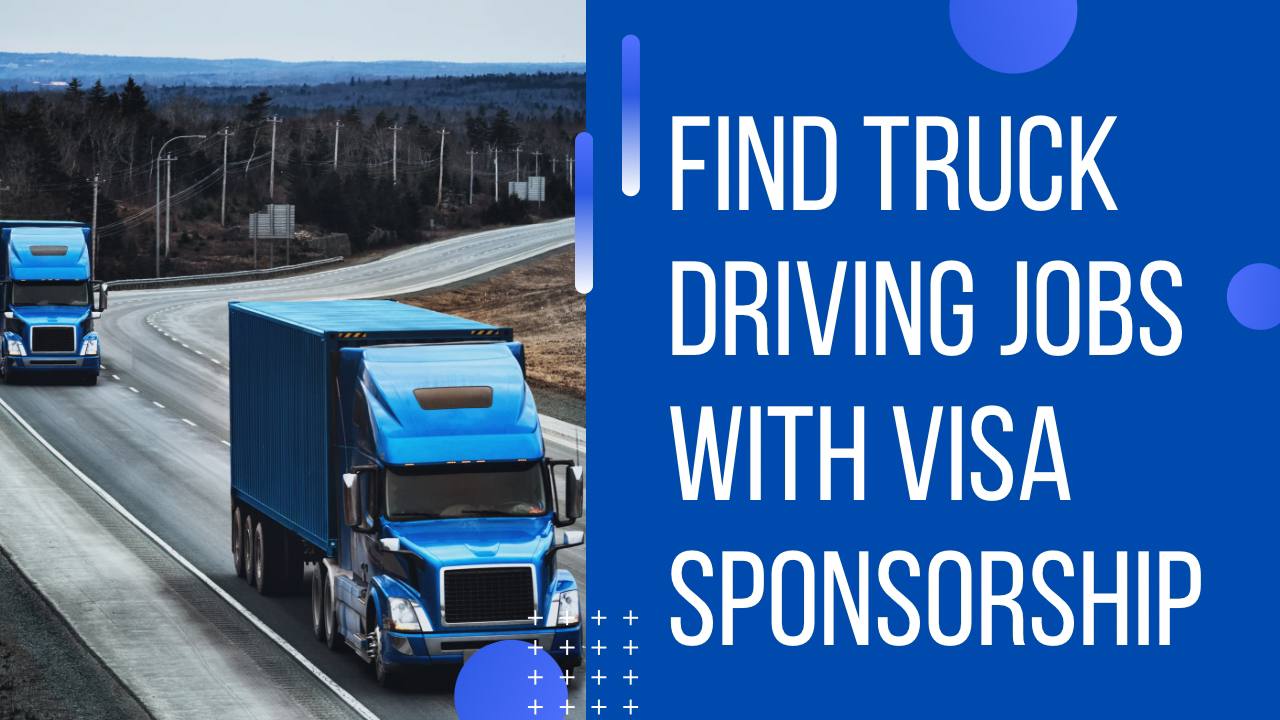
Your Comprehensive Guide to Driving Jobs in Canada with Visa Sponsorship (2024/2025)
Here is a guide on securing driving jobs in Canada with visa sponsorship, covering opportunities from 2024 and continuing into 2025.
Advertisement
Canada’s economy is the lifeblood of its vast and geographically diverse landscape, and professional drivers are the heart that keeps it pumping. From the coasts of the Atlantic to the Pacific, and across the expansive prairies, truck drivers and other professional operators are indispensable.
However, Canada is facing a critical and prolonged shortage of qualified drivers. An aging workforce, coupled with increasing demand in the logistics and transportation sectors, has created a significant opportunity for foreign nationals seeking a stable career and a new life in the Great White North.
Advertisement
In response to this labour gap, both the federal and provincial governments, alongside Canadian employers, have established robust pathways for foreign drivers to obtain work permits, secure visa sponsorship, and ultimately transition to permanent residency.
This guide provides an in-depth look at the driving jobs available, the benefits of working in Canada, the specific eligibility criteria you must meet, and a step-by-step application process for opportunities in 2025 and beyond.
The High Demand for Drivers in Canada.
The Canadian Trucking Alliance has consistently reported a shortage of tens of thousands of drivers, a gap that is projected to widen in the coming years. This isn’t just about long-haul trucking; the demand extends to local delivery drivers, bus operators, and specialized vehicle drivers.
This persistent need makes driving one of the most in-demand occupations for foreign workers. Employers are actively seeking reliable, experienced drivers and are often willing to navigate the complex immigration process, including securing a Labour Market Impact Assessment (LMIA), to sponsor the right candidates.
Types of In-Demand Driving Jobs.
Long-Haul Truck Drivers (NOC 73300): This is the most sought-after role. These drivers transport goods across provinces, territories, and often into the United States. They are the backbone of the supply chain, moving everything from consumer goods to raw materials.
Local and Short-Haul Delivery Drivers (NOC 75201): These drivers operate within a specific city or region, handling parcel delivery, food distribution, and local freight. The rise of e-commerce has caused demand in this area to skyrocket.
Bus Drivers (NOC 75200): Needed for public transit systems in cities, school bus routes, and intercity coach services.
Specialized Vehicle Operators: This includes dump truck drivers for construction sites, concrete mixer truck drivers, and waste collection vehicle operators.
Benefits of a Driving Career in Canada.
Securing a driving job in Canada offers more than just employment; it provides a comprehensive package of benefits that contribute to a high quality of life for you and your family.
Competitive Compensation: The earning potential for drivers in Canada is strong. While salaries vary by province, experience, and type of driving, the national average for long-haul truck drivers typically ranges from $55,000 to $75,000 CAD per year. Experienced drivers, owner-operators, or those on specialized routes can earn significantly more, often exceeding $100,000 CAD.
Pathway to Permanent Residency (PR): This is the ultimate goal for many foreign workers. A sponsored driving job is a direct stepping stone to becoming a permanent resident. Immigration programs like the Provincial Nominee Programs (PNPs) and Express Entry have specific streams or categories for transport occupations, giving you a clear route to settling in Canada permanently.
Job Security and Stability: Due to the chronic driver shortage, qualified drivers enjoy exceptional job security. The transportation industry is a pillar of the Canadian economy, ensuring a steady demand for your skills regardless of economic fluctuations.
Comprehensive Health and Social Benefits: As a full-time employee in Canada, you and your family will have access to the country’s world-class public healthcare system. You will also contribute to and be eligible for benefits from the Canada Pension Plan (CPP) and Employment Insurance (EI), which provides support in case of job loss or inability to work.
Family Sponsorship: Your work permit allows you to bring your family to Canada. Your spouse or common-law partner may be eligible for an open work permit, allowing them to work for any employer, and your dependent children can enroll in Canada’s high-quality public education system.
Regulated Working Conditions: Canada has strict labour laws that regulate driving hours (Hours of Service regulations), ensuring your safety and well-being. These laws mandate rest periods and limit on-duty time to prevent fatigue, promoting a safer work environment compared to many other countries.
Eligibility Requirements: Qualifying for Visa Sponsorship.
To be considered for a driving job with visa sponsorship, you must meet a set of specific requirements laid out by both Canadian employers and Immigration, Refugees and Citizenship Canada (IRCC).
1. Valid Job Offer and LMIA.
The foundation of visa sponsorship is a genuine job offer from a Canadian employer. For most foreign driver positions, the employer must obtain a positive Labour Market Impact Assessment (LMIA). An LMIA is a document issued by Employment and Social Development Canada (ESDC) that proves there is a need for a foreign worker to fill the job and that no Canadian worker or permanent resident is available. A positive LMIA is crucial evidence you’ll need when applying for your work permit.
2. Driving License and Experience.
Valid Commercial License: You must hold a valid and equivalent commercial driver’s license from your home country (e.g., a heavy truck or trailer license).
Verifiable Work Experience: Most employers require at least 2-3 years of verifiable experience driving the type of vehicle required for the job (e.g., semi-trailer trucks). You will need to provide reference letters from previous employers detailing your duties, dates of employment, and the types of vehicles you operated.
Clean Driving Record: A clean driving abstract (a record of your driving history) with no major violations or at-fault accidents is essential.
3. Language Proficiency
You must demonstrate a minimum level of proficiency in either English or French to ensure you can understand traffic laws, communicate with employers and law enforcement, and read road signs. The required level is typically a Canadian Language Benchmark (CLB) of 4 or 5. You must prove this by taking an approved language test:
A minimum of a secondary school diploma (high school education) is generally required. You may need to have your foreign educational credentials assessed by a designated organization (like WES) to get an Educational Credential Assessment (ECA) report, especially if you plan to apply for permanent residency through Express Entry.
5. Admissibility to Canada
You must be admissible to Canada. This means you must:
Undergo a medical examination by an IRCC-approved panel physician.
Provide police clearance certificates from every country where you have lived for 6 months or more since the age of 18 to prove you have no serious criminal record.
The Application Process: Your Step-by-Step Roadmap
Navigating the process of securing a sponsored driving job requires a structured and diligent approach.
Step 1: Prepare Your “Driver’s Portfolio.
Before you even start applying, gather all your essential documents into a professional portfolio. This should include:
A professional resume/CV tailored to Canadian standards, highlighting your driving experience, skills, and safety record.
A scanned copy of your commercial driver’s license (front and back).
Your official driving abstract or record from your home country.
Reference letters from past employers on company letterhead.
Your language test results (IELTS or CELPIP).
Your Educational Credential Assessment (ECA) report, if available.
Step 2: Find a Sponsoring Employer.
This is the most critical and often the most challenging step. Focus your search on employers who are known to hire foreign workers.
Canada Job Bank: This is the official Government of Canada job board. Look for listings that are “Verified” and explicitly state that the employer is open to hiring foreign candidates or has an approved LMIA.
Major Trucking Companies: Research the career pages of large Canadian trucking companies like Bison Transport, Mullen Group, Day & Ross, and Challenger Motor Freight. They often have dedicated programs for hiring international drivers.
Provincial Trucking Associations: Websites for provincial associations (e.g., Alberta Motor Transport Association, Ontario Trucking Association) often have job boards.
Reputable Recruiters: Use recruitment agencies that specialize in placing foreign drivers in Canada. Ensure they are legitimate and do not charge you a fee for finding a job, as this is illegal in Canada.
Step 3: The Job Offer and LMIA Process.
Once you receive a job offer, the employer will begin the LMIA application process with ESDC. This process is handled by the employer, but you will need to provide them with your personal information and documents. If the LMIA is approved, they will send you a copy of the positive LMIA letter and your official job offer.
Step 4: Apply for Your Work Permit.
With the job offer letter and positive LMIA in hand, you can now apply to IRCC for a closed work permit. This permit will tie you to that specific employer. The application is typically submitted online and requires you to upload all your supporting documents, including proof of experience, language tests, and identity documents. You will also need to pay the application fees.
As part of the application, you will be required to provide your biometrics (fingerprints and a photo) at a designated Visa Application Centre (VAC). You will also need to complete your medical exam. Once IRCC has processed your application and is satisfied that you meet all requirements, they will issue your work permit approval letter.
Step 6: Arriving in Canada and Getting Licensed.
Upon arrival at a Canadian port of entry, you will present your approval letter to a border services officer who will issue your official work permit. Your next immediate steps will be:
Apply for a Social Insurance Number (SIN).
Begin the process of converting your foreign driver’s license to a Canadian provincial license (e.g., a Class 1 license in most provinces). This will involve written tests, a medical exam, and a road test. Your employer will guide you through this process.
Step 7: Transitioning to Permanent Residency.
After gaining at least one year of Canadian work experience, you become a much stronger candidate for permanent residency. The most common pathways for truck drivers are:
Provincial Nominee Programs (PNPs):Provinces like Saskatchewan (Saskatchewan Immigrant Nominee Program – SINP), British Columbia (BC PNP), Alberta (AAIP), and Ontario (OINP) have specific streams for in-demand occupations, including truck drivers. A provincial nomination virtually guarantees an invitation to apply for PR.
Express Entry with Category-Based Selection:In 2023, IRCC introduced category-based draws for Express Entry candidates with experience in specific sectors, including transport occupations. If you have a high enough language score and meet the other criteria, you could be invited directly through this federal program.
Conclusion to your Road to a New Life in Canada.
The journey to becoming a professional driver in Canada is a challenging but incredibly rewarding one that everyone what to be part of. The demand for your skills is undeniable, and the pathways to employment and permanent residency are well defined. Success in 2024 and 2025 hinges on meticulous preparation, unwavering diligence, and a commitment to navigating the process correctly.
By building a strong professional portfolio, targeting legitimate employers, and understanding the immigration requirements, you can turn the dream of driving on Canadian highways into a reality. The road ahead offers not just a job with a competitive salary and excellent benefits, but also the security, stability, and high quality of life that Canada is known for. It is a long haul, but for the skilled and determined driver, the destination is well worth the journey.